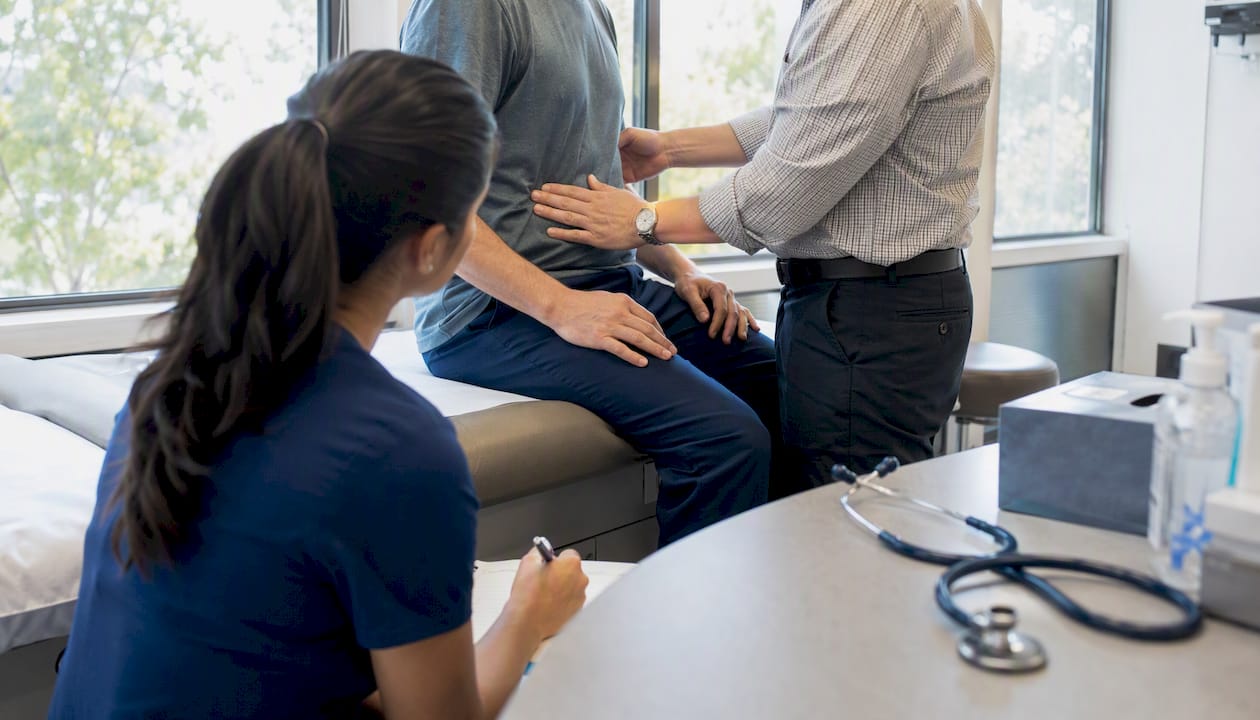
Aim for a practical target of shadowing hours across at least three specialties, with one of them in primary care. That single target, drawn from advising consensus across U.S. premed programs, covers the vast majority of MD and DO programs without padding your schedule unnecessarily. The distribution matters as much as the total: admissions committees want to see that you’ve observed medicine in more than one setting, not just logged hours in a single clinic.
- Log every session: date, physician name, specialty, setting, start and end time, and two sentences of personal reflection.
- Start contacting physicians now. Cold outreach takes longer than most students expect, and a single “yes” can take three to four weeks.
AAMC guidance describes physician shadowing as valuable preparation for understanding patient care and the physician’s role. For school-specific requirements, the Medical School Admission Requirements (MSAR) database is the authoritative place to check.
Key Takeaways
Most competitive U.S. medical school applicants should aim for 75 shadowing hours across at least three specialties, with primary care as the foundation, strong documentation, and parallel hands-on clinical experience.
| Point | Details |
|---|---|
| Target 75 hours | Advising consensus places the practical benchmark at 75 hours for most MD and DO programs. |
| Primary care is required | Include at least one primary care physician; it’s the most commonly expected specialty exposure. |
| Document every session | Log date, physician, specialty, setting, times, and a brief reflection note for each visit. |
| Alternatives can substitute | 87% of admissions officers accept alternatives like CNA or EMT work in place of shadowing. |
| Medschoolpilot tracks it all | Use Medschoolpilot to log hours by category, store supervisor contacts, and monitor readiness. |
Table of Contents
- How many shadowing hours for med school do most programs expect?
- How to split your hours across specialties and settings
- What admissions committees actually look for and how to document it
- Does shadowing count as clinical experience, and what are the alternatives?
- How to find shadowing opportunities and reach out effectively
- On-site etiquette: how to show up and behave professionally
- When to start shadowing and how to plan around your application timeline
- What the evidence actually says about shadowing requirements
- What I’d actually tell a student with limited time
- Medschoolpilot helps you track every shadowing and clinical hour in one place
- Sources
How many shadowing hours for med school do most programs expect?
No universal number exists. A peer-reviewed review published in PMC found significant variability in clinical exposure expectations across programs and concluded that meaningful exposure and reflection carry more weight than any fixed hour count. That said, advising offices have converged on practical ranges you can plan around.
The three tiers most advisors use:
- Defensible floor (20–30 hours): Enough to show you’ve observed medicine, but thin for competitive programs. Acceptable only when paired with substantial hands-on clinical work.
- Safe target range (50–100 hours): Where most successful applicants land. The University of Utah pre-health office recommends 50 hours as a minimum, with 70–80 hours described as very solid exposure. BYU pre-health advising echoes the same 50–80 range, noting that top applicants often exceed 100 hours.
- Competitive/high-expectation range (100–150+ hours): Useful for research-heavy or highly selective programs, and for applicants whose hands-on clinical experience is limited. Beyond roughly 150 hours, additional shadowing rarely moves the needle.
The key shift happens when you add strong hands-on clinical work, such as a CNA role or medical scribing. That kind of direct patient contact can lower the shadowing floor because it demonstrates something shadowing alone cannot: that you’ve actually participated in care, not just watched it.
Pro Tip: Track longitudinal exposure, not just total hours. Three months of weekly clinic shifts with one physician tells a richer story than six single-day visits to six different offices.
How to split your hours across specialties and settings
A practical distribution plan prevents the common mistake of spending all your time in one outpatient office and calling it done. The AAMC Careers in Medicine specialty profiles are a useful starting point for deciding which fields to observe.

The breadth rule: shadow at least one primary care physician (family medicine, internal medicine, or pediatrics) plus two to three specialists. Primary care is non-negotiable for most programs because it shows you understand the foundation of the healthcare system.
Format options and their trade-offs:
- Recurring clinic shifts (weekly or biweekly): Best for building a relationship and getting a letter of support. Slower to accumulate hours but far more meaningful.
- Single-day observerships: Good for exploring a specialty quickly. Hard to build depth or get a meaningful letter from one visit.
- OR blocks: High-impact for surgical specialties. Typically require hospital credentialing, so plan several weeks ahead.
- ER shifts: Fast-paced and broad. Useful for showing you can handle an unpredictable environment.
Both plans keep primary care as the largest block. Elective hours (a fourth specialty you’re personally curious about) are worth adding only after you’ve covered the core three.
What admissions committees actually look for and how to document it
Admissions committees are not counting hours on a spreadsheet. They’re reading your application for evidence of empathy, realistic expectations, and the ability to reflect on what you observed. A student who spent 60 hours shadowing and can describe a specific moment that changed how they think about patient communication will outperform one who logged 120 hours and wrote a generic paragraph about “confirming their passion for medicine.”
Competitive applicants typically report 50–100 hours across 2–4 specialties, with the strongest applications pairing those hours with documented observations and specific stories.
What to log for every session:
- Date and duration (start and end time)
- Physician name, specialty, and practice setting
- Supervisor contact information (email or phone)
- Two to three sentences of personal reflection: what surprised you, what you noticed about the physician-patient dynamic, one question you’d ask if you had five minutes
Verification options:
- Supervisor signature on a printed log: The minimum standard for AMCAS and AACOMAS entries. Easy to obtain; ask at the end of each shift.
- Evaluative letter from the physician: More powerful than a signature. Useful for programs that ask for a clinical or shadowing letter. Requires a sustained relationship, typically several weeks of recurring contact.
Pro Tip: Right after each shadowing session, write one paragraph in your phone’s notes app: what the physician did, what the patient seemed to feel, and one thing you didn’t expect. That raw material becomes your personal statement anecdote six months later.
A guide on how to track clinical hours covers the logging fields and verification steps in more detail if you want a ready-made template.
Does shadowing count as clinical experience, and what are the alternatives?
Shadowing is observation, not clinical experience. The distinction matters on your application. The simple test: does the activity put you in direct contact with patients and affect their care in some way? If yes, it counts as clinical experience. If you’re standing in the corner watching, it’s observation, and it belongs in a separate application section.
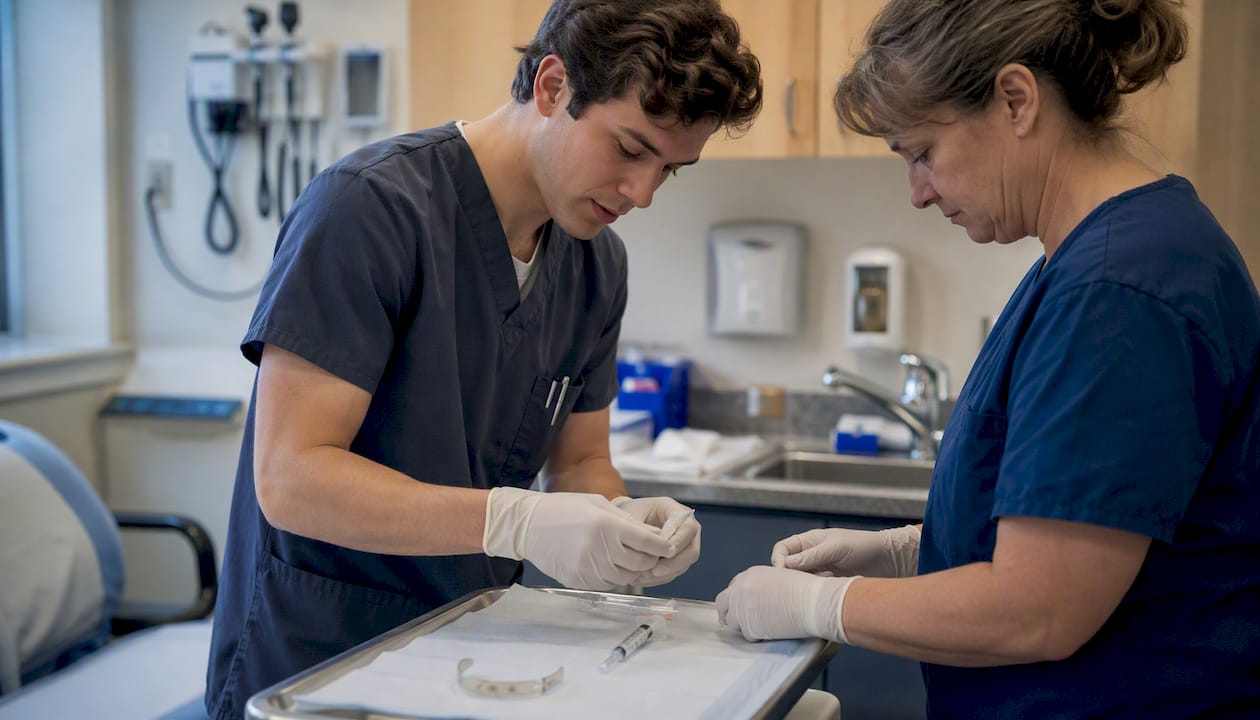
An AAMC survey found that 87% of admissions officers accept an alternate activity in place of clinical shadowing. That number matters because it means strong hands-on alternatives can reduce how much pure shadowing you need.
Accepted alternatives that count as clinical experience:
- Certified Nursing Assistant (CNA): direct patient care, highly valued
- Emergency Medical Technician (EMT): patient contact in high-acuity settings
- Medical scribe: real-time clinical exposure, though passive in patient care
- Medical assistant (MA): hands-on, often in outpatient settings
- Hospice or palliative care volunteer: emotionally meaningful, patient-facing
- Emergency department volunteer: variable patient contact depending on the program
- Clinical research with direct patient contact: counts when you’re interacting with participants, not just analyzing data
If you have 200 hours as a CNA, you can apply with 30–40 shadowing hours and still present a credible clinical picture. The reverse is not true: 200 shadowing hours cannot substitute for hands-on patient contact.
How to find shadowing opportunities and reach out effectively
Most students who struggle to find shadowing are either starting too late or sending generic emails. Both are fixable.
- Check your university’s pre-health office first. Many maintain lists of physicians who have agreed to take student observers. This is the fastest path.
- Ask faculty members. A professor who practices clinically can often connect you directly, bypassing the cold-outreach step entirely.
- Contact clinic volunteer coordinators. Large outpatient clinics and hospital systems often have formal observership programs with a coordinator who handles student requests.
- Use your personal network. Family physicians, dentists, or any healthcare professional you know personally can either take you themselves or refer you to a colleague.
- Apply to structured programs. The Summer Health Professions Education Program (SHPEP) and similar pipeline programs offer mentored clinical exposure with formal verification, which is especially useful if you don’t have an existing clinical network.
- Follow up respectfully. Send one follow-up email seven to ten days after your initial outreach. After that, move on and try another contact.
Sample outreach email:
Subject: Medical Student Observer Request — [Your Name], [University]
Dear Dr. [Last Name],
My name is [Your Name], and I’m a [year] undergraduate at [University] planning to apply to medical school in [year]. I’m writing to ask whether you would be willing to allow me to observe in your clinic for a few sessions. I’m particularly interested in [specialty] and would be grateful for any time you can offer, even a single half-day. I’m available [days/times] and can work around your schedule entirely.
Thank you for your time and consideration.
[Your Name] | [Email] | [Phone]
Pro Tip: Mention a specific reason you’re interested in their specialty. “I’m interested in family medicine because I want to understand longitudinal patient relationships” gets a response far more often than a generic request.
On-site etiquette: how to show up and behave professionally
Your conduct during shadowing is part of your application. Physicians talk to colleagues, and a student who behaved unprofessionally is remembered.
What to wear and bring:
- Business casual at minimum; a white coat is not appropriate unless the physician provides one
- A small notepad and pen (not your phone) for notes
- Your university ID and any required hospital badge
- Clean hands: wash or sanitize before entering any patient area
Patient interaction rules:
- Always ask the physician before entering a patient room, every time
- Introduce yourself as a student observer, not a medical student
- Never touch a patient, examine, or offer any clinical opinion
- Maintain strict confidentiality: no photos, no names outside the clinical setting, no social media posts
What to do during the visit:
- Watch the physician’s communication style, not just the clinical procedure
- Note how the physician explains diagnoses in plain language
- Write questions down; ask them after the patient interaction, never during
What not to do:
- Use your phone during patient encounters
- Interrupt the physician mid-conversation
- Record audio or video of any kind
- Offer unsolicited opinions on the case
When to start shadowing and how to plan around your application timeline
Start in your freshman or sophomore year, when your schedule has the most flexibility. Junior and senior years fill up fast with MCAT prep, research, and leadership commitments. Shadowing done early also gives you time to convert a good relationship with a physician into a clinical role or a letter of recommendation.
A practical timeline:
- Year 1–2 (exploratory phase): Shadow two to three physicians in different specialties. Goal: confirm medicine is the right path and identify which settings interest you most. Aim for 20–30 hours.
- Year 2–3 (deepening phase): Add recurring shifts with one or two physicians. Build toward 50–75 total hours. Start adding hands-on clinical work alongside shadowing.
- Year 3–4 (polishing phase): Reach your target total, complete documentation, and secure any letters tied to shadowing. Reserve this time for MCAT, research depth, and leadership.
If you’re starting late (junior year or later), you can compress responsibly by committing to two to three half-days per week for a semester. That pace reaches 50 hours in roughly eight to ten weeks without burning out your schedule.
Pro Tip: Longitudinal shadowing, returning to the same physician over months, is worth more than the equivalent hours spread across many one-off visits. Admissions readers notice when a student says “I shadowed Dr. X for six months” versus “I visited twelve different offices.”
What the evidence actually says about shadowing requirements
The recommendations in this article draw from official AAMC guidance, university pre-health offices, and peer-reviewed analysis. Here’s what each source contributes:
- AAMC: Describes shadowing as valuable preparation for understanding the physician role and directs applicants to MSAR for school-specific policies. Also confirms that 87% of admissions officers accept alternatives.
- PMC peer-reviewed review: Confirms no universal numeric requirement exists and emphasizes quality of exposure over raw totals.
- University pre-health offices (Utah, BYU): Both recommend 50 hours as a minimum and 70–80 hours as solid, with top applicants often at 100+.
- Advising consensus: Residency Advisor and Premed Catalyst both cluster around 50–100 hours as the practical target range, with 75 hours as a widely cited benchmark.
The consistent message across all sources: no single number is required, but 75 hours across multiple specialties with documented reflection is a defensible, practical target for most U.S. MD and DO programs. Check MSAR for any program you’re seriously considering, because a handful of schools publish specific minimums or preferences.
What I’d actually tell a student with limited time
If you came to me with 20 hours available right now, I’d say: spend them with a primary care physician, preferably in a recurring format over four to six weeks. That single relationship, documented well, does more for your application than 20 scattered hours across five specialties.
At 50 hours, add one inpatient or specialty experience. At that point, start a hands-on clinical role in parallel. Scribing, CNA work, or ED volunteering will strengthen your application faster than adding more shadowing hours.
At 75 hours, you’re in solid shape for most programs. Stop adding shadowing for its own sake and focus on reflection. Can you describe a specific patient interaction that changed how you think about medicine? Can you explain what surprised you about how a physician communicates a difficult diagnosis? Those answers matter more than the difference between 75 and 100 hours.
The students who struggle in interviews are rarely the ones with fewer hours. They’re the ones who watched medicine happen without paying attention to what they were watching.
Medschoolpilot helps you track every shadowing and clinical hour in one place
Keeping a credible, exportable record of your shadowing hours is one of the most overlooked parts of the application process. Medschoolpilot is built specifically for this: a readiness-tracking platform where you log shadowing sessions with physician name, specialty, setting, dates, and reflection notes, all in one workspace.
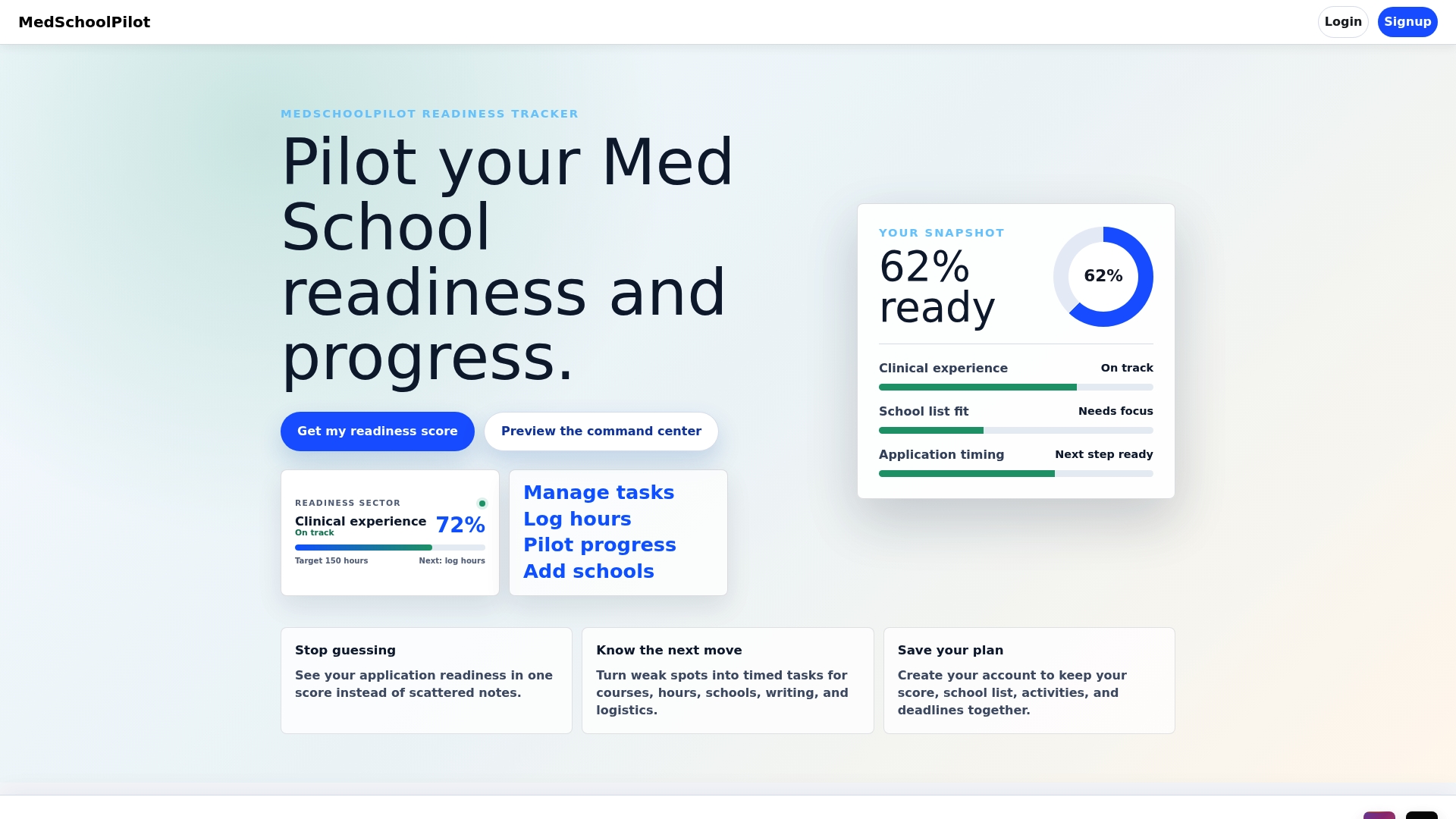
When it’s time to fill out AMCAS or AACOMAS entries, your hours are already organized and verifiable. The platform’s readiness scoring also shows you at a glance where shadowing fits relative to your other application components, so you’re not guessing whether you’ve done enough.
- Log hours by category: shadowing, clinical, research, and volunteering tracked separately
- Supervisor contact fields: store physician names and contact info for verification
- Readiness scoring: see how your shadowing total affects your overall application readiness
Get free access to Medschoolpilot and start building a record that holds up on your application.
Sources
Use these primary sources to verify requirements for programs you’re targeting:
- Shadowing a Doctor | Students & Residents
- Five ways to gain experience without shadowing
- PMC article (review) on clinical exposure expectations
- How many shadowing hours do you really need for medical school